
Reviews
Ghost Tower Escape stands out by removing combat entirely, forcing players to rely on timing and pattern recognition. The vertical level design keeps each floor feeling fresh, and the double jump mechanic adds strategic depth. Ghost patterns become increasingly complex without feeling unfair. The checkpoint system reduces frustration while maintaining challenge. It is a polished, family-friendly game that respects the player's time and offers genuine puzzle-solving satisfaction.
Description
Core Gameplay Concept
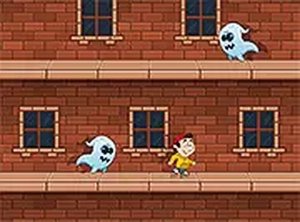
Ghost Tower Escape presents a fresh take on platform games by removing direct conflict. Players control a character who cannot attack, so success depends entirely on movement and observation. Each floor of the tower introduces new arrangements of floating spirits that patrol specific paths. The goal is to find safe gaps and time jumps perfectly to ascend without contact. This design shifts focus from reaction speed to strategic patience, making each level feel like a spatial puzzle rather than a test of reflexes.
Vertical Level Design
The game unfolds in a single vertical tower, with each level representing a floor. Platforms are placed at varying heights and distances, requiring players to evaluate jump arcs before moving. Ghosts move in repeating patterns, some slow and predictable, others faster with irregular pauses. Later floors combine multiple ghost types, forcing players to track several movement cycles simultaneously. The layout encourages players to memorize patterns while adapting to new combinations, creating a steady difficulty curve that feels earned.
Controls and Movement
Movement is handled through simple directional inputs, with a jump button and a double jump ability. The double jump is a limited resource that recharges only after landing on a solid platform. This mechanic adds a layer of resource management, as using it too early can leave the player stranded mid-air. The controls are responsive, with a slight buffer that helps with tight timing. Mobile users can tap on-screen buttons, while desktop players use keyboard keys, both offering similar precision.
Progression and Checkpoints
Progress is saved at checkpoints placed every few floors. If a ghost touches the character, they lose a life and restart from the last checkpoint rather than the beginning. This system reduces frustration while still penalizing mistakes. Lives are limited, but extra lives can be earned by collecting hidden items scattered on certain platforms. This encourages exploration without forcing it, as players can choose to focus solely on reaching the top or hunt for bonuses to extend their play session.
Visual and Audio Atmosphere
The game uses a clean, cartoon-like art style with muted colors that fit the ghost theme without being scary. Ghosts are designed as friendly-looking spirits with distinct shapes and colors, making them easy to distinguish. Background music is light and rhythmic, changing tempo as players approach the top. Sound effects for jumps and ghost proximity provide audio cues that help with timing. The overall presentation keeps the experience family-friendly and approachable for all ages.
Replayability and Challenge
After completing the tower, players can revisit any floor to improve their time or collect missed items. A star rating system awards up to three stars per floor based on speed and item collection. This adds a reason to replay without adding new content. The game also includes a practice mode where players can attempt any previously unlocked floor without losing lives, ideal for mastering difficult patterns. These features extend the game's lifespan beyond a single playthrough.


Player Comments
Sign in to comment
You must be logged in before posting a review or rating.
No account? Create one
No comments yet. Be the first to comment!